UncategorizedComments Off on Announcing the Annual NYCR Interactive Show 2020!
Jul212020
Some say that time is a circle, but we know the real truth, time is a Tube!
Announcing the 2020 Virtually Interactive Show: Tubular Time, happening August 15th 2020, in cyberspace. While we won’t be gathering in the space, we will still have real interactive art that you can view from home! We’re also having an open call for projects here: https://forms.gle/KKa1wbpEvdcmK9Me8 Physical installations that can be hosted at the space will be broadcasted online by members to all attendees of the show. Stay tuned for more posts on just how interactive part of the show works! In the meantime, this event is Free and open to the public, but you need a ticket to attend: https://www.eventbrite.com/e/tubular-time-nycrs-virtually-interactive-show-2020-tickets-114266004696
We may be shut down to the public for now, but NYCResistor members are still busy making protective equipment for healthcare workers with NYCMakesPPE.com . We’re so proud to be able to help NYC’s healthcare workers. If you want to help, you can donate here, or get involved with production yourself.
NYCR member Hannah on supply chains: “The materials are constantly changing as our team chases down whatever is available, so our processes and models have to evolve in real time." pic.twitter.com/Bj0SU4Z1Eh
UncategorizedComments Off on Swedish Sourdough Bread from Scratch
Apr012020
Mikael Vejdemo-Johansson and Susanne Vejdemo
Based on reading a whole bunch of different Swedish blog, wiki and web sources, we started off a sourdough starter on Saturday:
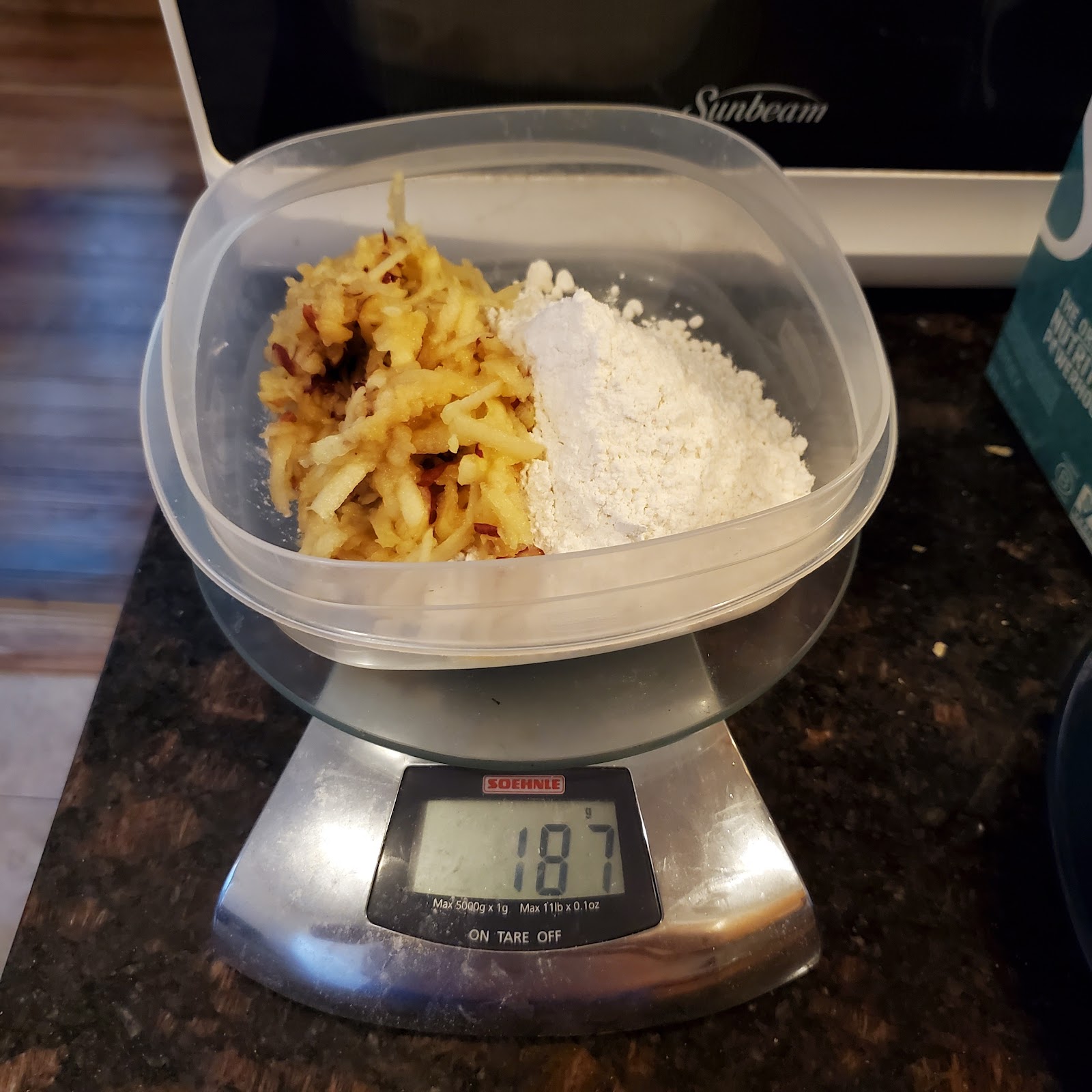
1 apple (grated)
100g flour
1dl filtered water
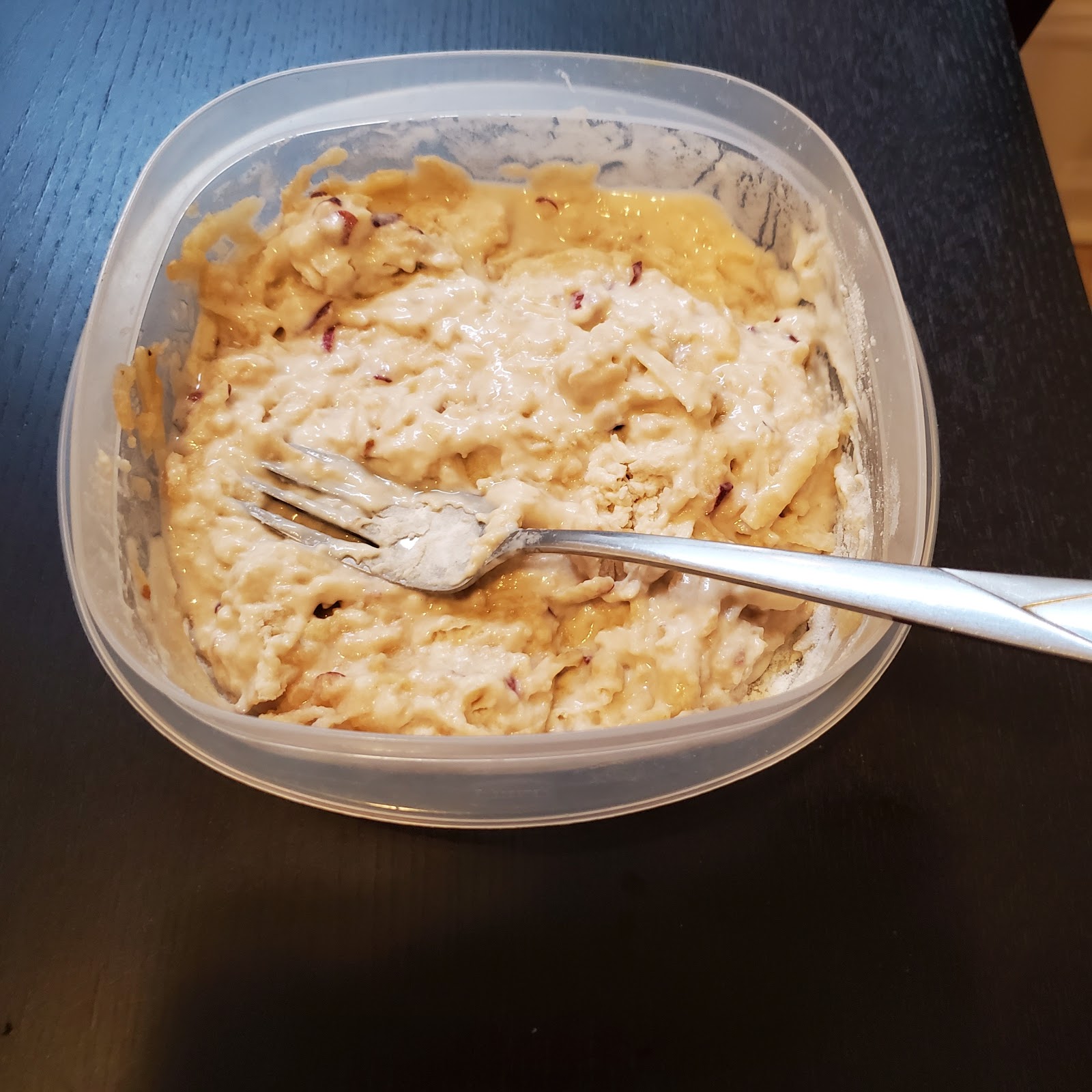
Stir until vaguely homogenous. Let it sit with a lid leaned on but not tight fitting.
Stir every morning and every evening for 4 days, feeding it on day 2 (with 20g flour 20g water).
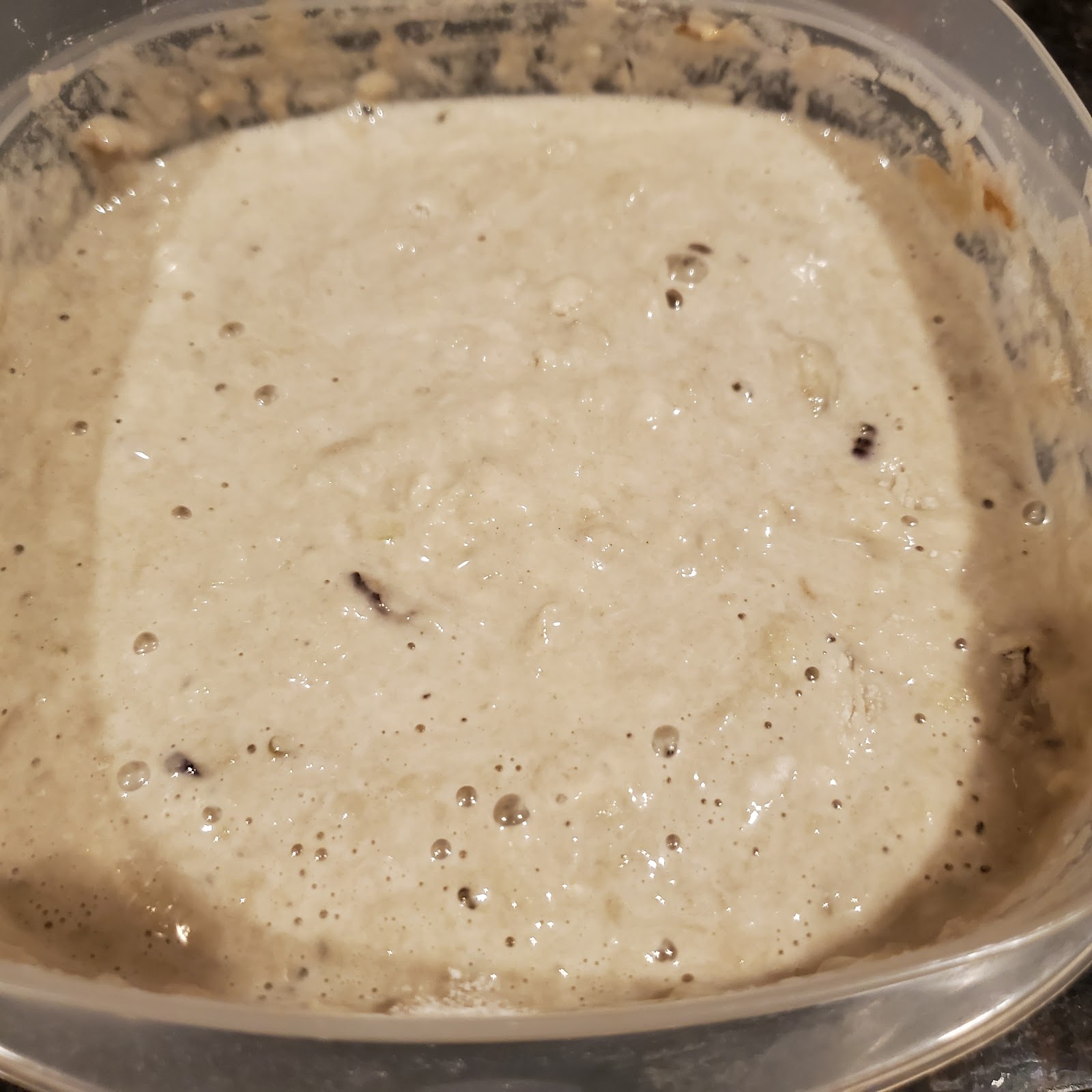
Already on Sunday we could see a bunch of bubbles forming in the dough. We gave up on weighing everything, and fed the dough with 1tbsp filtered water and 2tbsp flour. Monday was far less bubbly and Tuesday afternoon MVJ lost patience and fed it with 2dl flour, 1dl filtered water.
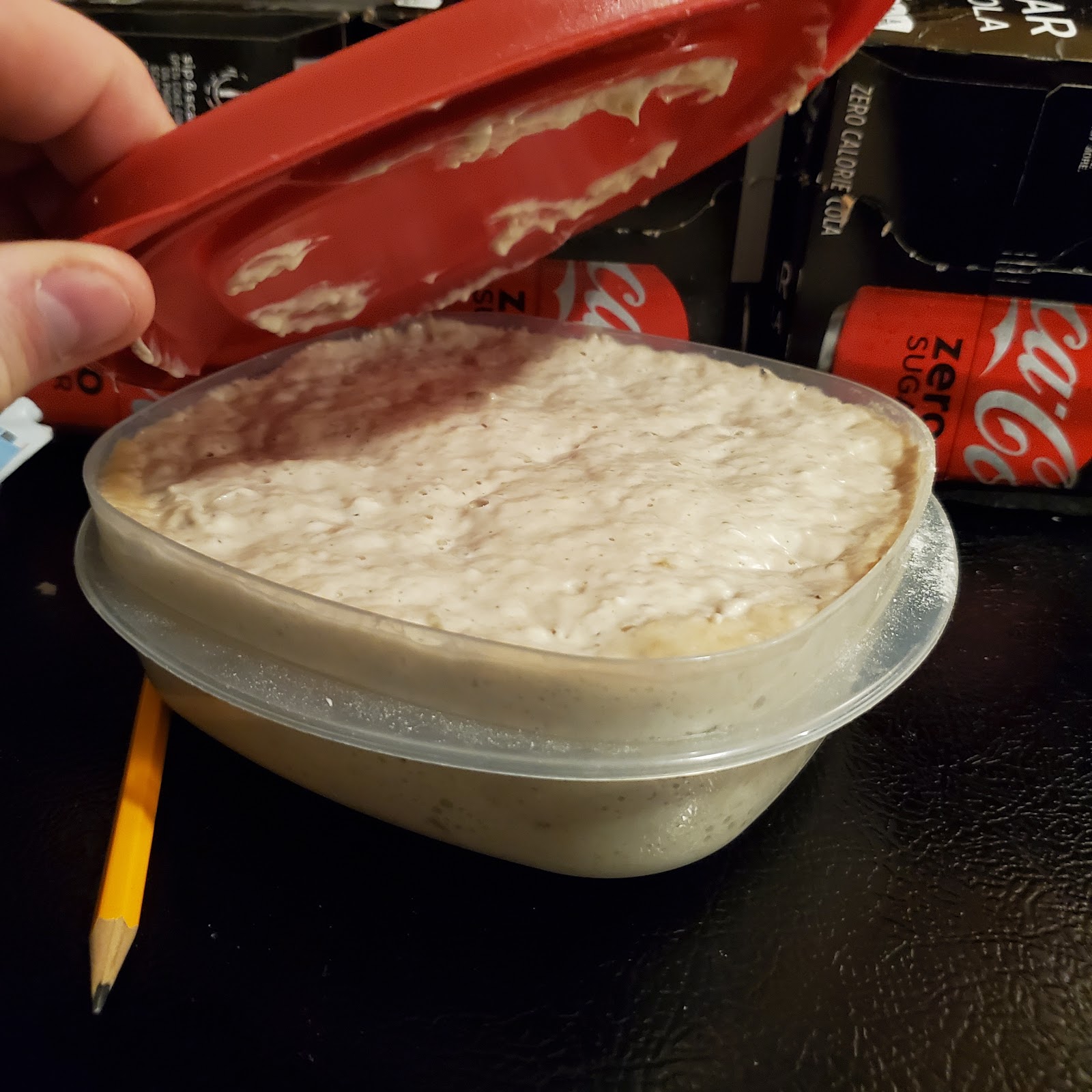
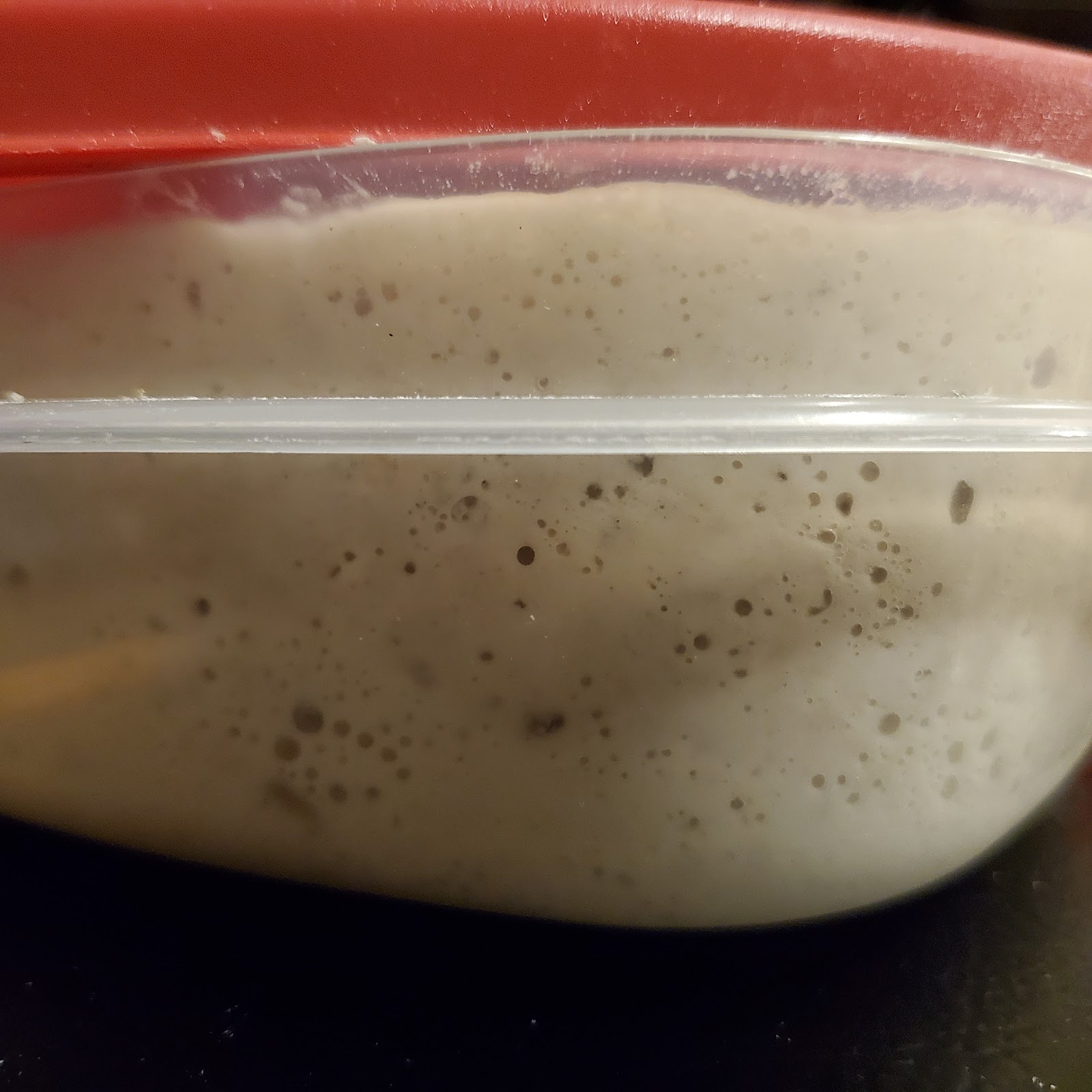
Tuesday evening the dough was quite bubbly and about ready to climb out of its Tupperware box.
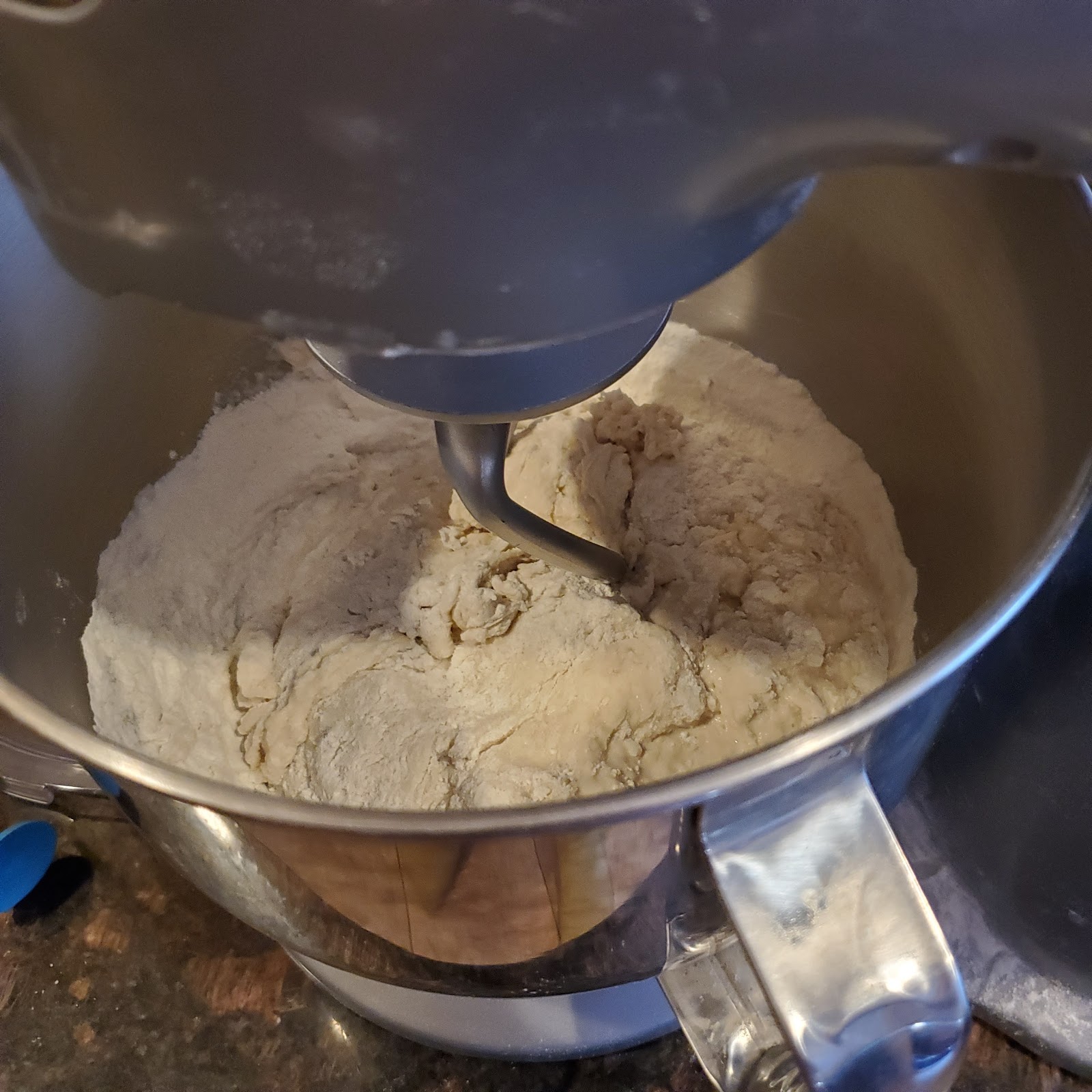
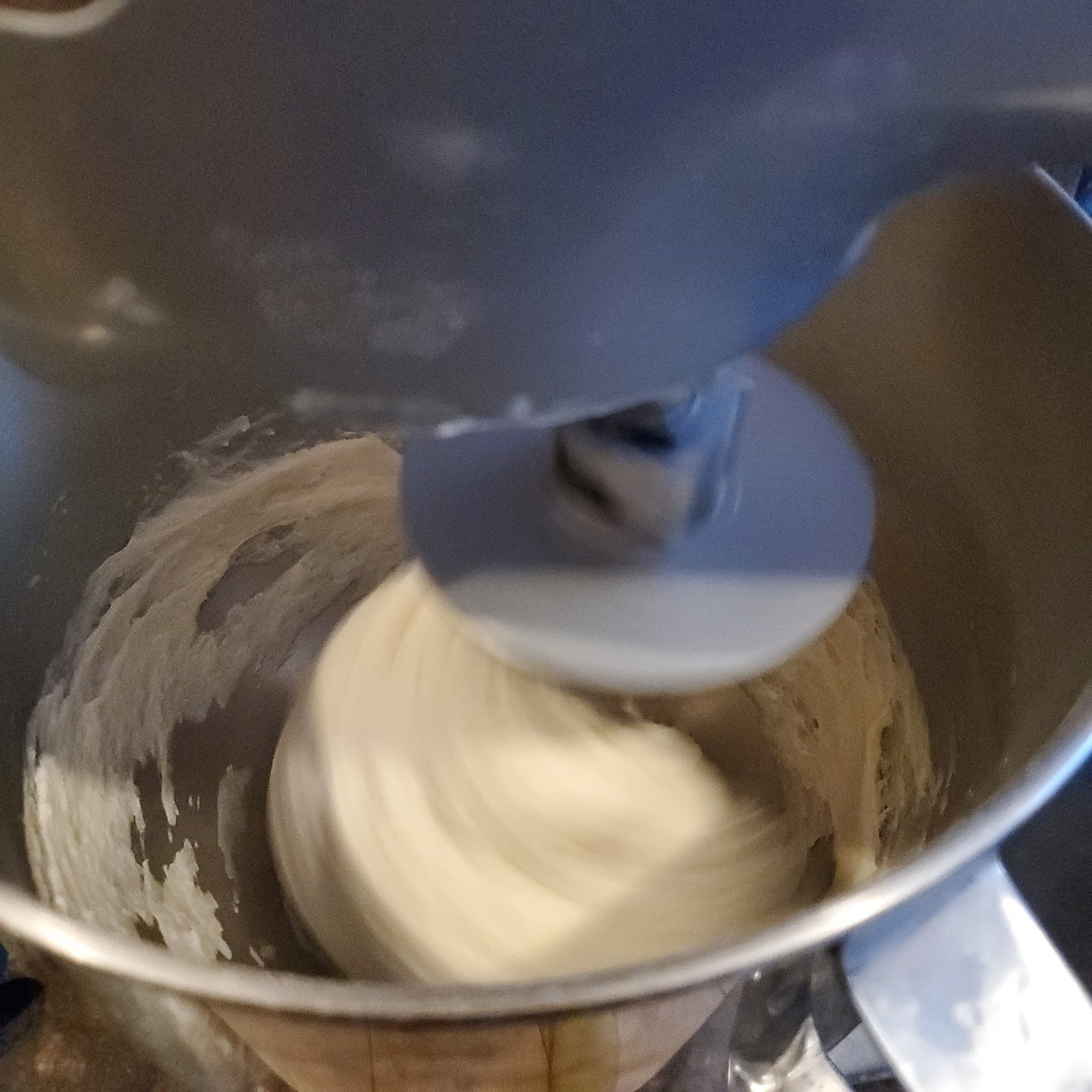
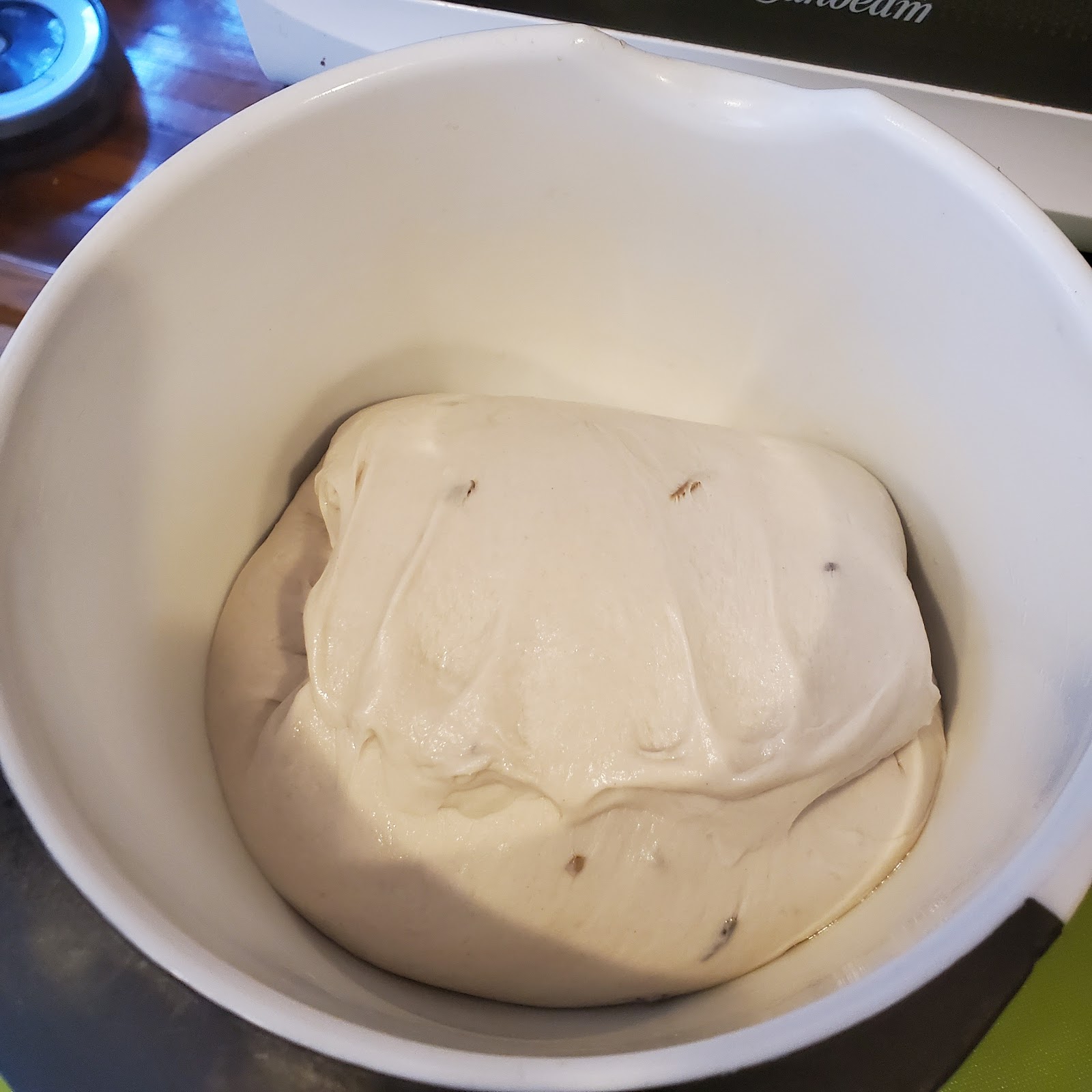
Pour the sourdough in a bowl. Add water, yeast and flour. Stir into a sticky dough and let it rest 30 minutes (autolysis). Add the sea salt and knead for 5 minutes by machine until the salt is dissolved and the dough a bit tenser. Rise in oiled bowl, covered, 45-60 minutes. It’s supposed to double in size. Exact time varies with room temperature, water temperature, how active your sourdough is, and phase of the moon 😉
Next perform a “full fold”: fold the dough 4x in the bowl: take the left side, fold to the middle. Next the right side, then the bottom and finally the top. The dough should feel tenser. Rise 20-40 minutes so that the dough relaxes. Another full fold, another 20 minutes rise.
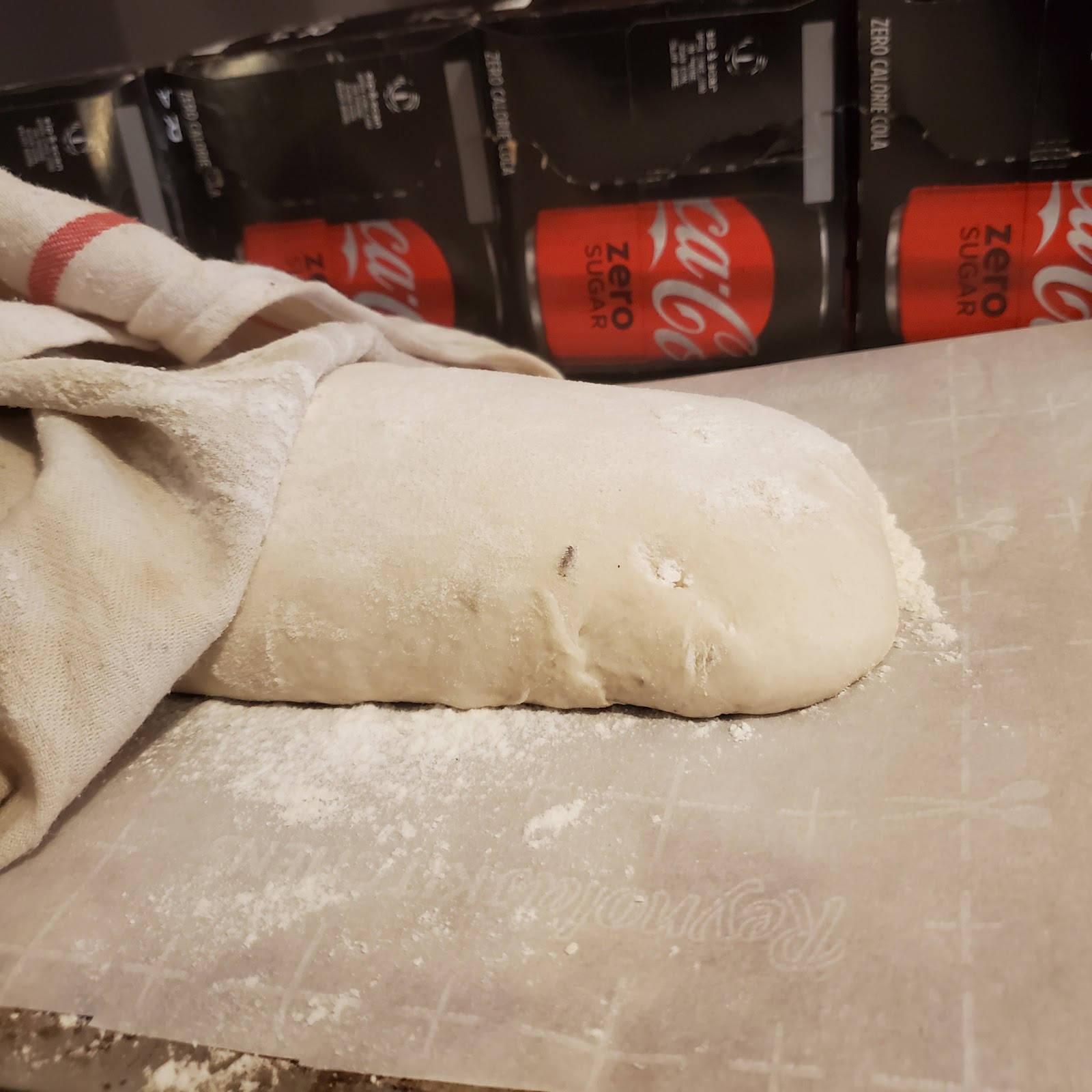
Now perform a “half fold”: only do the top-to-middle and bottom-to-middle folds. Take the dough out of the bowl and place it on a well-floured surface. Add flour on top to make the dough easier to handle. Separate into two pieces and shape them into oblong loaves. Sprinkle some flour on top to prevent them burning in the oven. Let rise 10-20 minutes, until they have gained some height and feel soft and smooth. After this final rise, turn them upside down (for a prettier bread) and put them on baking paper on a baking sheet. You can decorate them by cutting a few shallow cuts on the top.
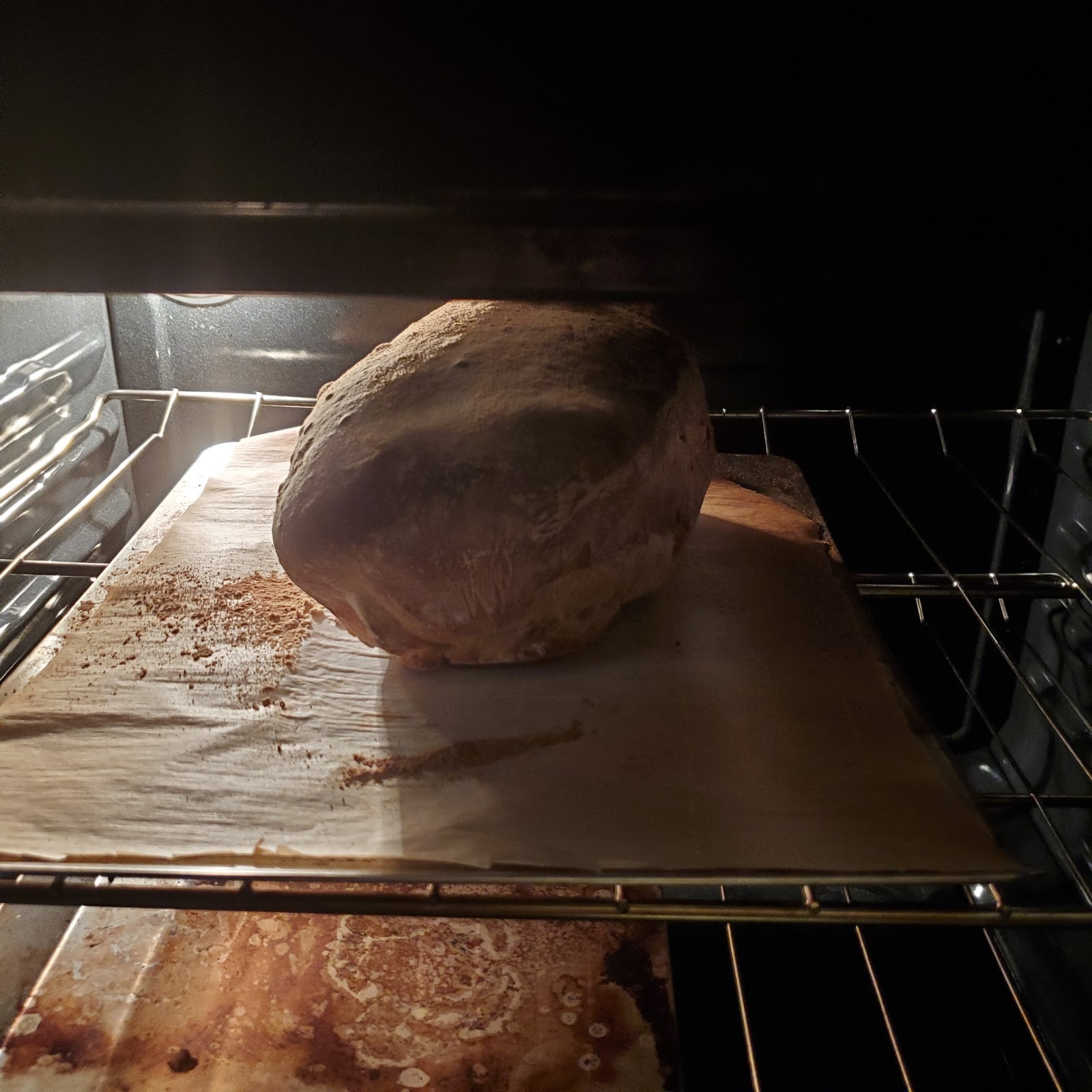
Bake 20-30 minutes at 500ºF. It’s good to add a bowl of water at the bottom of the oven. It is important (when possible) to use top and bottom heating elements.
We decide to do half the recipe: make 1 loaf of bread. 300g sourdough, 1 cup filtered water, some yeast and 8dl bread flour later, the autolysis is on its way and it’s time for the first of many many breaks in this recipe. Picking out the equivalent of 3.5g fresh yeast from a packet with dry yeast – not an easy task. We settled on approximately ½ tsp dry yeast.
The rest followed the recipe quite closely – out came a slightly flat-looking loaf of dough, maybe 1.5” thick. Rise and pop in the oven. 20 minutes later, the bread had ballooned up to a 4” height, and 30 minutes later the internal temperature came out to well over 190ºF – the bread was finished.
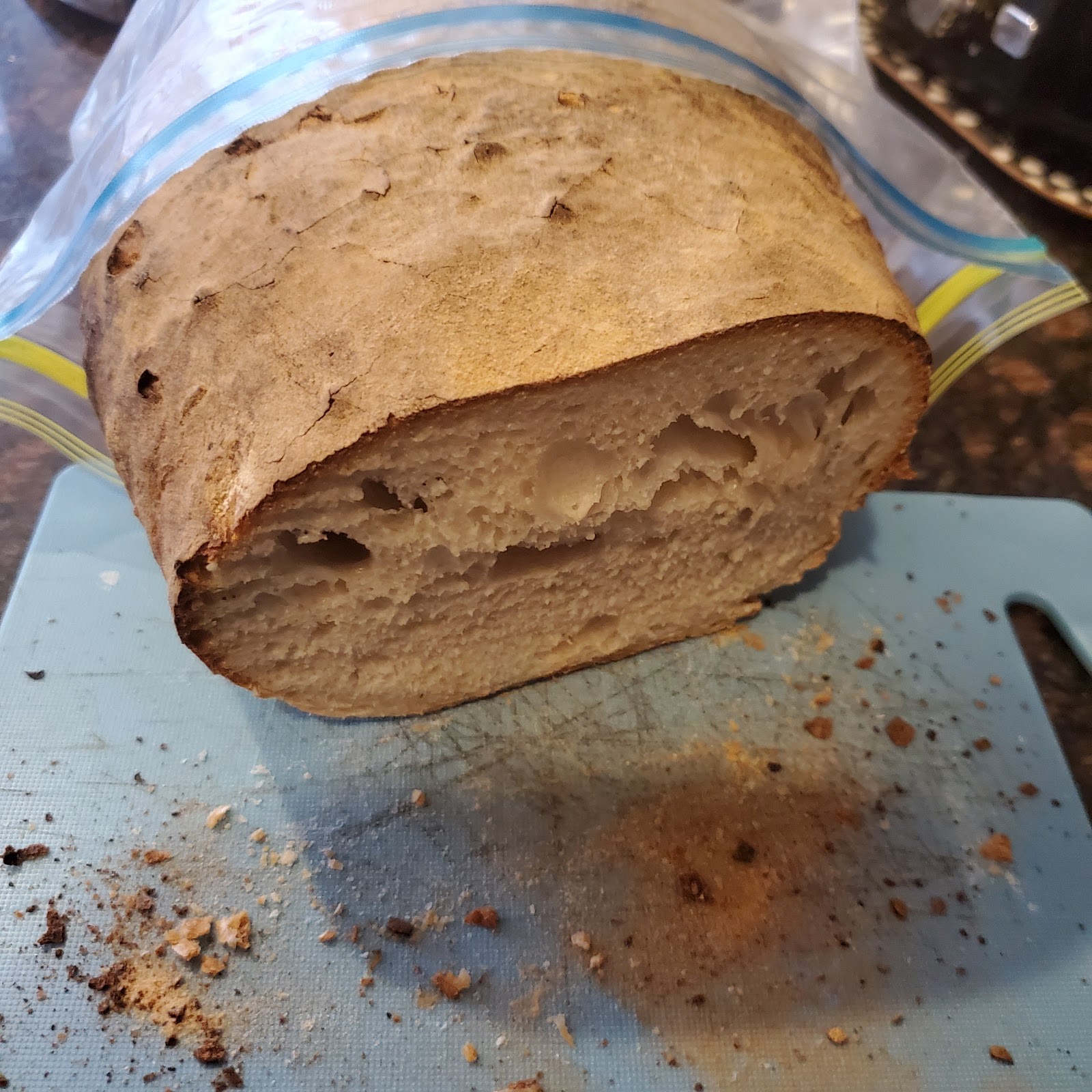
The resulting bread was divine. Chewy with large bubbles, crunchy crust, and a pleasantly subtly complex flavour.